The Docs Are the Product: Why Your Best Contributor Might Never Write a Line of Code

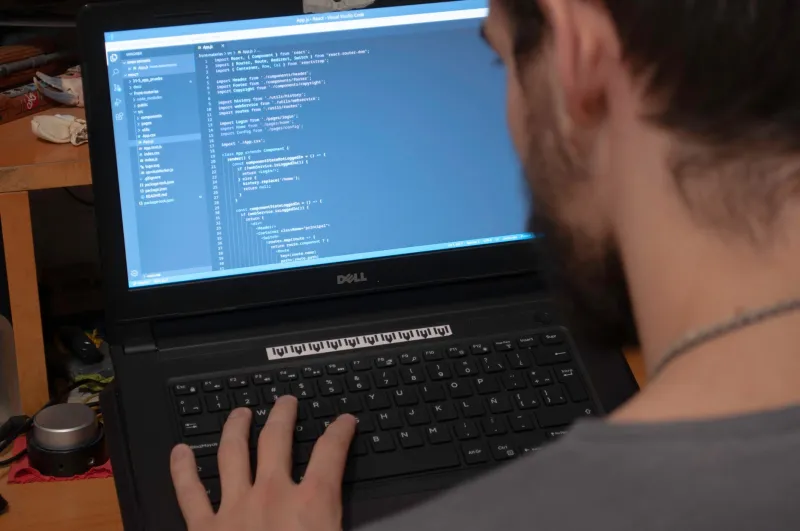
Photo: person writing technical documentation at laptop with notebook, via img.freepik.com
Ask someone why they bounced off a decentralized tool and you'll rarely hear "the cryptography was bad." You'll hear "I couldn't figure out how to get started." The install failed on a Mac. The quickstart assumed a Linux background. The docs hadn't been touched since the last breaking release. The code was fine. The explanation wasn't.
In the Hive spirit — build together, decentralize everything — we've spent a lot of ink on governance, funding, and protocol design. Today let's talk about the contributor role that decides whether any of it reaches actual humans: the writers.
The Adoption Bottleneck Nobody Funds
Decentralized projects live or die on network effects, and network effects run on onboarding. Every confused user who gives up is a node that never joined the graph. Yet across the ecosystem, documentation is treated as a chore — something a maintainer grinds out at 1 a.m. before a release, or a "good first issue" dumping ground full of typos.
That's backwards. Docs aren't a side effect of the product. For most users, the docs are the product. They're the interface. And interfaces deserve professionals.
Consider the pattern playing out across the ecosystem. Projects that invested in real technical writers saw measurable shifts: shorter time-to-first-success for new users, fewer duplicate support questions eating maintainer hours, and — the big one — conversion of readers into contributors. A well-written tutorial is a recruiting pipeline. Someone who successfully follows your getting-started guide has already done 80% of the work of becoming a contributor.
Writers Who Leveled Up Their Projects
You've seen this in your own stack, even if you didn't clock it. The project you actually adopted over the shiny competitor? Nine times out of ten, it won on clarity. Think of the tools with legendary docs — the ones where the tutorial just worked — and notice how they dominate mindshare despite often having smaller engineering teams than rivals.
In community after community, the same story repeats: a volunteer starts by fixing a broken link, ends up rewriting the entire onboarding flow, and suddenly the project's GitHub issues shift from "how do I install this" to actual bugs. Support channels quiet down. Contributors show up pre-qualified. One good writer can do the work of a small support team, permanently.
Pay Writers From the Treasury — Seriously
Here's where governance meets reality. Many decentralized projects sit on treasuries — tokens, grants, community funds — and spend them on audits, core dev grants, and conference booths. All defensible. But if onboarding is your growth ceiling, a documentation budget is often the highest-ROI line item available.
A concrete proposal for any project with a treasury:
- Fund a paid docs fellowship — a stipended, 3–6 month role for a technical writer, same legitimacy as a dev grant.
- Commission the critical path — pay specifically for the install guide, the first-app tutorial, and the troubleshooting page. That's where adoption happens.
- Translate what works — the US audience is big, but the global network is bigger. Translated docs are cheap network expansion.
Measure Docs Like Commits
What gets measured gets funded, so stop treating docs as unmeasurable. Track these alongside your commit stats:
- Time to first success: median time from landing on the docs to a working install.
- Docs-to-contribution rate: how many readers of your tutorial open a PR within 90 days?
- Deflection: support questions resolved by linking a doc page instead of writing an answer.
- Freshness: percentage of doc pages touched within the last two release cycles.
None of this requires fancy tooling. It requires deciding that explanation is engineering.
The decentralized web won't win because our protocols are more elegant. It'll win when a curious person can go from zero to contributing on a Saturday afternoon without filing a single support ticket. That outcome is written — literally. Let's start paying the people who write it.