You Shouldn't Have to Carry This Alone: The Hidden Weight of Being a One-Person Open-Source Project
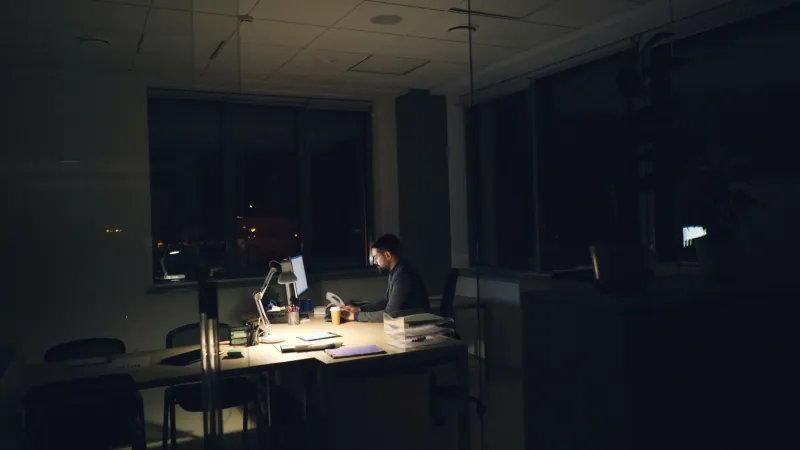
Somewhere right now, a developer is sitting alone with a GitHub notifications tab they've been afraid to open for three weeks. They built something useful — maybe even something a lot of people depend on — and somehow that success turned into a second job nobody offered to pay them for. No team. No backup. Just them and an ever-growing backlog of issues, pull requests, and the quiet dread that comes with being the single point of failure for something that matters.
This is the solo maintainer experience. And it's a lot more common, and a lot more painful, than the open-source world likes to admit.
The Gap Between Building and Governing
Most open-source projects don't start with a governance plan. They start with someone solving a problem they had, sharing the solution, and watching it slowly accumulate stars. The original thrill — people are using this! — can carry you for a while. But there's a hard wall you eventually hit when the project stops being yours and starts being everyone else's infrastructure.
That transition is brutal, and it happens without ceremony. One day you're a person with a side project. The next, you're fielding bug reports from enterprise teams, getting tagged in Twitter threads when something breaks, and realizing that your weekend hobby now has SLA implications you never agreed to.
The governance gap — the space between "person who built a thing" and "person who runs a community" — is where a lot of maintainers quietly fall apart.
What Burnout Actually Looks Like in This Context
Burnout for solo maintainers isn't always dramatic. It doesn't always look like someone rage-quitting and nuking their repo. More often, it looks like latency. Issues that sit unanswered for months. Pull requests that never get reviewed. A changelog that stops updating. The maintainer is still around, technically, but they've emotionally checked out while the project keeps running on inertia.
There's also a specific flavor of decision fatigue that comes with being the only vote in the room. Every architectural choice, every breaking change, every "should we support this use case" debate lands entirely on one person. There's no one to rubber-duck with. No one to share the blame when a call turns out to be wrong. Solo maintainers often describe spending enormous mental energy on decisions that a two-person team would have resolved in a ten-minute conversation.
And then there's the isolation. Open source has this communal mythology around it — the bazaar, the hive, the collective — but the day-to-day reality for a lot of maintainers is profoundly lonely. You're doing invisible labor for strangers who, understandably, only show up when something's broken.
The Control Paradox
Here's the part that doesn't get talked about enough: a lot of solo maintainers aren't solo because no one wants to help. They're solo because letting people in feels genuinely scary.
When you've built something from scratch, the codebase carries your decisions, your opinions, your aesthetic. Handing commit access to someone else — even someone skilled, even someone well-intentioned — means risking that the thing you built stops feeling like yours. This isn't vanity. It's a real tension between the project as community infrastructure and the project as creative expression.
The fear of losing control often manifests as raising the bar for contributions so high that contributors give up. Or reviewing PRs so slowly that people stop submitting them. The maintainer isn't being malicious. They're protecting something they care about in the only way they know how, which happens to also be slowly strangling the project's ability to grow.
Finding Collaborators Without Losing the Plot
The good news is that you don't have to choose between total control and total chaos. There's a middle path, and it starts with being intentional about what "control" actually means to you.
Some maintainers find it helpful to separate the project's core identity — its design philosophy, its scope, its values — from its day-to-day operations. You can write a GOVERNANCE.md or PHILOSOPHY.md document that captures what the project is and isn't. That document becomes the guardrail that lets other people contribute without you having to personally approve every decision.
Another approach: start with trust-building at low stakes. Give someone triage access before you give them merge access. Let people help with documentation or issue labeling before they're touching core logic. Trust compounds over time, and a gradual on-ramp is a lot less scary than handing over the keys all at once.
It's also worth being honest in your README about what kind of collaboration you're looking for. "This project is maintained by one person and response times may be slow" is not a failure — it's accurate documentation. Paradoxically, that honesty often attracts better contributors, because it sets realistic expectations and invites people who actually want to help rather than just consume.
The Community That Already Exists
One thing a lot of solo maintainers overlook: the community might already be there, just waiting to be activated. Your issue tracker is full of people who care enough about your project to report bugs. Your pull request history has names of people who tried to contribute. Your discussion threads have folks offering workarounds to other users.
Those people are not strangers. They're proto-collaborators. Reaching out directly — even just a comment like "hey, I noticed you've been really active here, would you be interested in helping with triage?" — can be the spark that turns a consumer into a contributor.
Decentralized projects don't have to start decentralized. They can start as one person and evolve into something more distributed as trust develops. The hive doesn't need a queen — it needs a culture that makes collective ownership feel safe.
You're Allowed to Set Limits
Finally, and maybe most importantly: you are allowed to say what this project is and isn't. You're allowed to mark it as unmaintained. You're allowed to archive it. You're allowed to hand it off entirely. You're allowed to narrow its scope. You're allowed to say "I only have bandwidth for critical security fixes right now."
None of those things make you a bad maintainer. The open-source ecosystem has a bad habit of treating maintainer labor as infinitely renewable, and it's not. You are a person, not a service. The project exists because of you, and your sustainability matters more than any feature request.
The goal of decentralized, community-driven software isn't to find one person willing to sacrifice themselves for the commons. It's to build systems where the weight is shared — where no single node is also a single point of failure. That starts with you being honest about what you can actually carry, and being willing to ask for help before you're already underwater.
You built something worth using. That's real. Now let's make sure it doesn't cost you everything.