Not Everything Needs to Be a DAO: A Honest Reckoning With Decentralization Overload

Look, we're called Hive Project. We believe in distributed systems, community-owned infrastructure, and building tech that doesn't bow to a single point of control. That's not changing.
But here's the thing nobody in this space likes to say out loud: decentralization has a cost, and sometimes that cost isn't worth paying.
This isn't a retreat from our values. It's a maturation of them. Because if we're serious about building resilient, community-driven systems, we have to be honest about when the cure is worse than the disease.
The Seduction of Full Decentralization
There's a particular kind of excitement that hits when you first go deep on decentralized architecture. Everything clicks. You see the fragility in your old stack — the single database, the one SaaS vendor who could pull the rug, the CI/CD pipeline running on someone else's servers — and you want to fix all of it, immediately.
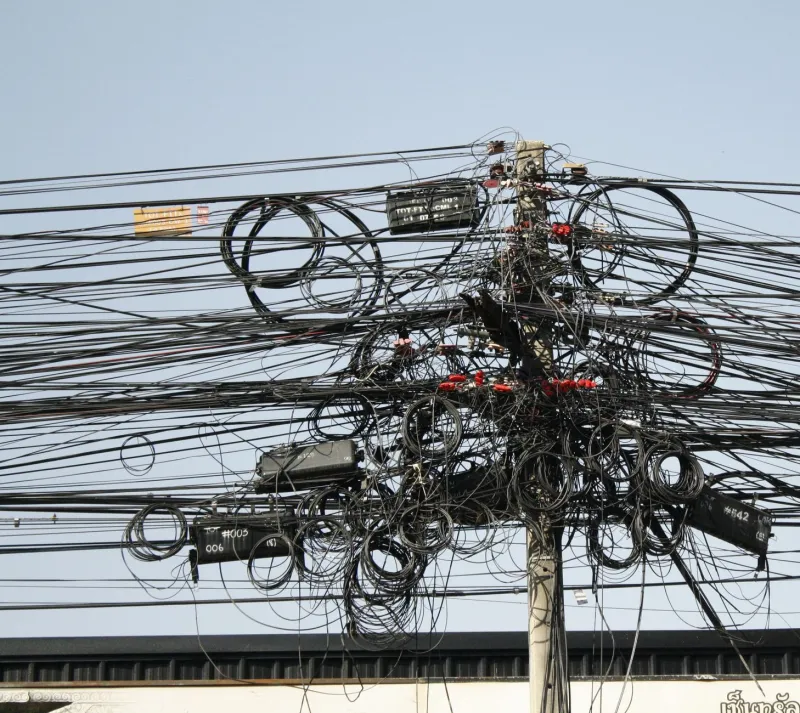
So teams do. They decentralize their storage, their auth layer, their messaging, their deployment pipeline, their governance model, and sometimes even their on-call rotation logic. Each individual decision makes sense in isolation. Together, they create a system so distributed that nobody fully understands it anymore.
That's the fragmentation trap.
Real Teams, Real Wreckage
Consider a mid-sized engineering team at a US-based fintech startup — not naming names, but this story is more common than you'd think. They were early believers in the decentralized stack. They migrated off AWS RDS onto a distributed database cluster. They replaced their centralized auth provider with a self-hosted, federated identity system. They spun up IPFS for asset storage. They adopted a DAO-style governance process for every major technical decision.
Eighteen months later, their mean time to recovery on incidents had tripled. Onboarding a new engineer took six weeks instead of two. Their on-call engineers were burning out trying to debug failures that crossed four different decentralized systems simultaneously. And their governance process — built to give everyone a voice — had become a bottleneck that slowed down even trivial infrastructure changes.
They hadn't built a resilient system. They'd built a complicated one.
Or take the open-source project communities that adopted fully decentralized decision-making for every contribution, from major protocol changes down to fixing a typo in the README. Noble in theory. In practice, it created decision fatigue so severe that core contributors started quietly abandoning the project rather than endure another two-week async debate about whitespace conventions.
The Hidden Costs Nobody Puts in the Pitch Deck
When we advocate for decentralization — and we do, loudly — we tend to lead with the benefits: resilience, censorship resistance, community ownership, reduced vendor lock-in. Those are real and they matter.
What gets undersold are the operational taxes:
Complexity compounds. Every decentralized component you add doesn't just add its own complexity — it multiplies the complexity of everything it touches. Debugging a failure in a federated system requires understanding how five moving parts interact. That's a skill load you're placing on every engineer on your team.
Consensus is expensive. Decentralized governance is only as good as the community's capacity to engage with it. When you require distributed consensus for decisions that could reasonably be made by one or two trusted people, you're not empowering your community — you're exhausting them.
Documentation debt is brutal. Centralized tools often have massive ecosystems of tutorials, Stack Overflow answers, and vendor support. When you roll your own decentralized stack, you own the documentation burden too. That's fine if you have the bandwidth. Most teams don't.
Incident response gets murky. When something breaks in a distributed system with no clear ownership, the question "who fixes this?" can take longer to answer than the fix itself.
A Framework for Choosing Your Battles
So how do you figure out where decentralization is worth it? Here's the lens we'd suggest:
Ask What You're Actually Protecting Against
Decentralization is fundamentally a risk mitigation strategy. So start with the risk. Are you protecting against a vendor going under or changing their terms? Against censorship or deplatforming? Against a single point of technical failure? Against loss of community control over a shared resource?
If you can clearly name the threat, you can evaluate whether decentralization actually addresses it — and whether the operational cost is proportional to the risk.
Separate Infrastructure From Governance
These are two different problems that often get conflated. You might need decentralized infrastructure (distributed storage, federated identity) without needing decentralized governance, or vice versa. A community-run project might benefit enormously from transparent, distributed decision-making while running perfectly well on a straightforward centralized database. Don't assume the architecture and the governance model have to match.
Apply the Reversibility Test
Some centralization decisions are easy to undo later. Others create deep lock-in that's painful to escape. Prioritize decentralizing the things where centralization creates the most irreversible dependency. Your logging stack? Probably fine to keep centralized for now. Your user data and identity layer? That's where lock-in really bites.
Measure the Human Cost
The best technical architecture is the one your team can actually operate. If your decentralized setup requires specialized knowledge that only two people on your team have, you've just created a different kind of single point of failure — a human one. Factor in onboarding time, on-call cognitive load, and documentation burden as real architectural costs.
Default to Pragmatic, Upgrade to Principled
Start with the simplest thing that doesn't create dangerous lock-in, and layer in decentralization as the need becomes clear. This isn't a compromise of your values — it's a sustainable way to act on them. A team that ships and learns is more valuable to the decentralized ecosystem than a team that built the theoretically perfect distributed system and then burned out maintaining it.
The Hive Mentality, Honestly Applied
A hive isn't chaos. It's organized, distributed intelligence with clear roles and efficient communication. Bees don't decentralize the process of making honey just because decentralization is philosophically appealing — they decentralize the parts where distributed effort produces better outcomes, and they're ruthlessly efficient everywhere else.
That's the model worth emulating.
Decentralize your data ownership. Decentralize control over shared community resources. Decentralize the systems where a single point of failure would be catastrophic or where vendor capture would undermine your mission. And then — critically — don't decentralize the rest just because you can.
The strongest argument for decentralization isn't an ideological one. It's a practical one: in the right context, distributed systems are more resilient, more equitable, and more durable than their centralized counterparts. But that argument only lands if we're honest about the contexts where it's true.
Choose your battles. Build the things that matter. And don't let the perfect distributed architecture become the enemy of the functional, community-owned one.