Open Source, Closed Loop: How the Tools We Trust Are Quietly Centralizing Again
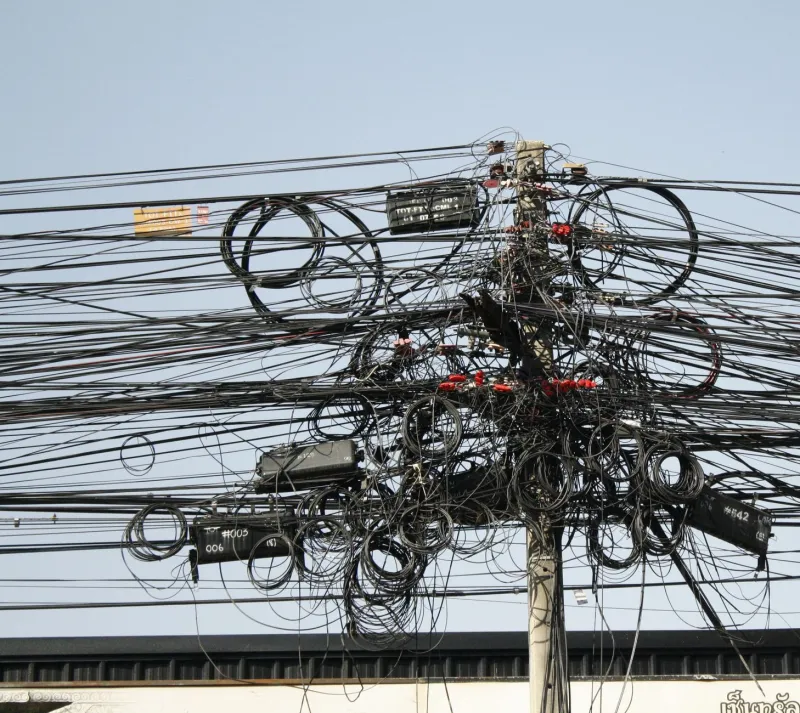
There's a certain irony baked into the modern open-source stack. We write code to escape vendor lock-in. We choose MIT-licensed libraries over proprietary SDKs. We preach decentralization at every conference and in every Slack channel. And yet, if you audit the dependency tree of a typical production application today, you'll find something uncomfortable: a staggering amount of your infrastructure's stability rests on the shoulders of maybe a dozen people — most of whom are unpaid, burned out, or both.
Welcome to the dependency trap. It's not a conspiracy. Nobody planned this. But the result looks a lot like the monopoly problem we thought we were solving.
The Illusion of Distributed Ownership
When developers talk about open source, they usually mean freedom — freedom to fork, to audit, to self-host. And that's real. But freedom to use a package is not the same as freedom from dependence on it.
Consider what happened in 2016 when a developer named Azer Koçulu unpublished left-pad from npm — an 11-line JavaScript utility. Within hours, builds were failing across the internet. Netflix, Spotify, and thousands of smaller apps hit walls. The package itself was trivial. The problem was structural: the entire Node.js ecosystem had quietly decided to trust a single registry, npm, and a single author's continued goodwill.
Or look at the 2022 colors.js and faker.js incident, where maintainer Marak Squires intentionally introduced breaking changes to protest the lack of financial compensation for his work. Again, production pipelines broke. Again, teams scrambled. Again, the lesson was the same: we had built brittle systems on top of voluntary labor without ever asking whether that was sustainable.
These aren't edge cases. They're symptoms.
One Registry to Rule Them All
The centralization problem isn't just about individual maintainers — it's structural. npm, PyPI, RubyGems, Maven Central — these are the chokepoints of modern software development. They're convenient, well-indexed, and deeply embedded in CI/CD pipelines everywhere. They're also single points of failure.
In July 2023, a PyPI outage lasting several hours disrupted Python package installations globally. In 2021, npm suffered an extended incident that blocked package publishing for a significant chunk of the ecosystem. These aren't hypothetical risks. They're documented, recurring events that affect real teams shipping real products.
And beyond outages, there's the supply chain attack surface. The ua-parser-js hijack in 2021, the node-ipc protest-ware incident in 2022 — both involved packages with millions of weekly downloads being compromised or weaponized. When you centralize distribution, you centralize risk.
Maintainers themselves will tell you the pressure is unsustainable. In conversations across forums like GitHub Discussions and Mastodon, you see the same themes: massive download counts, zero compensation, occasional thank-you notes, and the creeping anxiety of knowing that a single bad day — or a single moment of burnout — could cascade into someone else's production incident.
"I maintain three packages with a combined 40 million monthly downloads," one maintainer posted on the Fediverse last year. "I also have a full-time job and two kids. The math doesn't work. It never worked."
Auditing Your Own Exposure
So what can engineering teams actually do? The first step is brutal honesty about your own dependency graph.
Most teams have never done a real dependency audit beyond checking for known CVEs. That's table stakes. What's rarer — and more valuable — is auditing for concentration risk: how many of your critical dependencies are maintained by a single person? How many of them are hosted exclusively on one registry? How many have gone more than six months without a commit?
Tools like npm audit, pip-audit, and Dependabot catch security issues. But tools like socket.dev or manual inspection of maintainer activity can help you spot the quieter risks: the abandoned library that 30% of your codebase depends on, the one-person project that hasn't had a PR reviewed in eight months.
Start with your top 20 dependencies by import frequency. For each one, ask:
- Is this maintained by a single person or an organization?
- What happens if this package disappears from its registry tomorrow?
- Do we have a vendored copy or an internal mirror?
- Could we fork and maintain a minimal version if we had to?
This isn't paranoia. It's infrastructure hygiene.
Building Resilience Into the Hive
At Hive Project, we think about software the way we think about decentralized networks: redundancy isn't waste, it's architecture. The same logic that makes distributed systems resilient applies to your dependency strategy.
Mirror what matters. Tools like Verdaccio (for npm) or Artifactory let you run internal package mirrors. If the upstream registry goes down, your builds keep running. If a package gets yanked, you still have your pinned version. This is standard practice in enterprise environments — it should be standard everywhere.
Vendor strategically. For truly critical libraries — the ones that touch your auth layer, your data pipeline, your core business logic — consider vendoring the source directly into your repo. Yes, you lose automatic updates. You gain predictability and control.
Support the maintainers. This one sounds soft, but it's structural. GitHub Sponsors, Open Collective, Tidelift — these aren't charity. They're investments in the stability of your supply chain. If your company's revenue depends on an open-source library, funding its maintainer is just risk management with better PR.
Prefer foundation-backed projects. Libraries stewarded by the Apache Foundation, the Linux Foundation, or similar organizations have governance structures that survive individual burnout. They're not immune to problems, but they're more resilient than a solo maintainer's GitHub account.
Diversify registries where possible. Increasingly, projects are publishing to multiple registries or offering direct GitHub installs as fallbacks. Build that fallback into your toolchain before you need it.
The Bigger Picture
The dependency trap is, at its core, a governance problem. We built an ecosystem that extracts enormous value from volunteer labor and routes that value through centralized chokepoints — and then we called it decentralization because the source code was visible.
Real decentralization means distributing not just access, but responsibility. It means funding the people who hold up the infrastructure. It means building systems that can survive the loss of any single node — whether that node is a cloud provider, a package registry, or a tired maintainer who finally decides they've had enough.
The tools to do this exist. The awareness is growing. The question is whether engineering culture will catch up before the next left-pad moment — or the next one that's a lot harder to recover from.
Your dependency tree is a governance document. It's time to start reading it that way.