Queen Bees Are a Myth: 7 Things Software Swarms Can Learn From Actual Hives
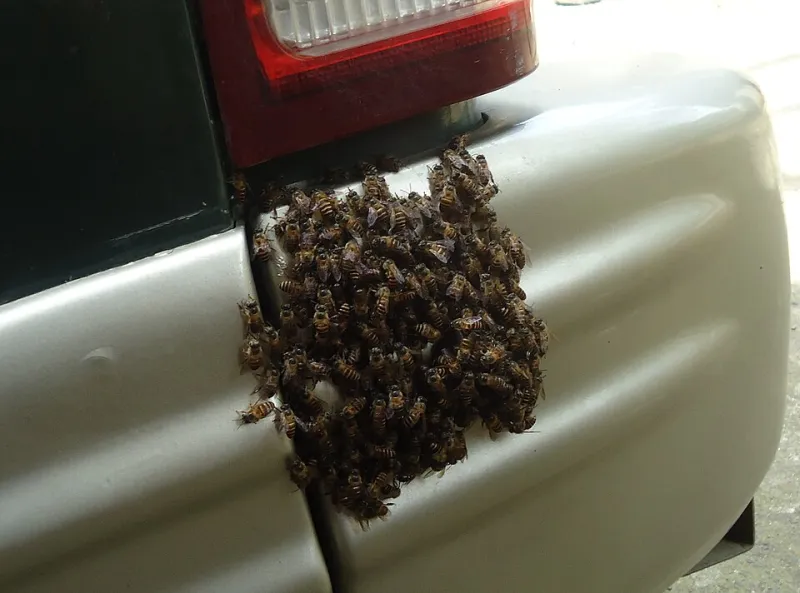
Photo: Obsidian Soul, CC0, via Wikimedia Commons
We put a hive in the name for a reason. Bees run one of the oldest decentralized systems on Earth: tens of thousands of workers coordinating complex construction, logistics, and climate control with no boss, no org chart, and no Slack channel. If your contributor community is struggling to scale coordination, evolution has already run the experiment — and left you the notes.
Here are seven lessons from the swarm, each paired with a practice you can steal today.
1. The Queen Doesn't Rule
Plot twist for the uninitiated: the queen doesn't command anything. She's a genetic and chemical anchor — a shared identity, not a decision-maker. Workers decide everything.
The practice: Stop looking for (or fear-mongering about) a "BDFL." Healthy projects need a shared identity and values more than a monarch. Write your mission down. Make it the thing everyone orbits, not a person everyone awaits.
2. Swarms Vote With Their Feet
When bees pick a new nest, scouts advertise candidate sites through waggle dances, then gradually converge. Nobody tallies ballots; the swarm reaches quorum and moves. Dissenting scouts aren't exiled — they just keep dancing until the evidence convinces them, or it doesn't.
The practice: Run proposals as working prototypes, not debate threads. Let contributors "dance" for their ideas with a proof of concept, and let adoption be the vote. Discussion forums decide nothing; demos decide everything.
3. Split Without Civil War
When a hive gets too big, it swarms: the old queen leaves with half the workers, and a new one rises in the original hive. Two healthy colonies where there was one. No court case, no bitter manifesto.
The practice: Stop treating forks as betrayal. If a community outgrows its coordination capacity, a planned split — with shared history, mutual links, and maybe shared infrastructure — is growth, not divorce. Build amicable-fork tooling into your governance docs before you need it.
4. Redundancy Is a Feature
Lose 20% of a hive's workers and nothing much changes. Every role is staffed many times over; there are no indispensable bees.
The practice: Audit your project for single points of failure. If only one person can deploy, review, or explain the payment module, you don't have a contributor — you have a liability. Pair people on every critical role until nobody's absence can take the colony down.
5. Do One Job Well, Then Switch
Bees progress through careers: nurse, builder, forager, guard. Role changes are triggered by age and colony need, not applications or politics.
The practice: Make contributor paths fluid by design. Rotate triage duty. Let a docs writer try core dev. Rigid roles in volunteer communities are how burnout and gatekeeping start.
6. The Hive Regulates Itself
Bees collectively thermostat the hive — fanning air when it's hot, clustering when it's cold. Climate control is distributed and continuous.
The practice: Community health needs the same constant, distributed maintenance. Don't save moderation and conflict resolution for an annual crisis. Small, ongoing, shared interventions keep the temperature right.
7. Dance Only What You've Seen
A scout's waggle dance advertises a site she personally evaluated. No secondhand hype, no speculation.
The practice: Weight contributions by demonstrated experience. Roadmap opinions from people running the code in production should count for more than drive-by hot takes — not through hierarchy, but through visible, earned signal.
Build Like It's Biology
None of this means communities should be run like an apiary. But when your coordination problems feel unprecedented, remember: a system with no managers has been scaling collaboration for a hundred million years. The hive isn't a metaphor. It's a benchmark.