Split Decisions: Why the Best Thing That Ever Happened to Some Software Was Someone Walking Away
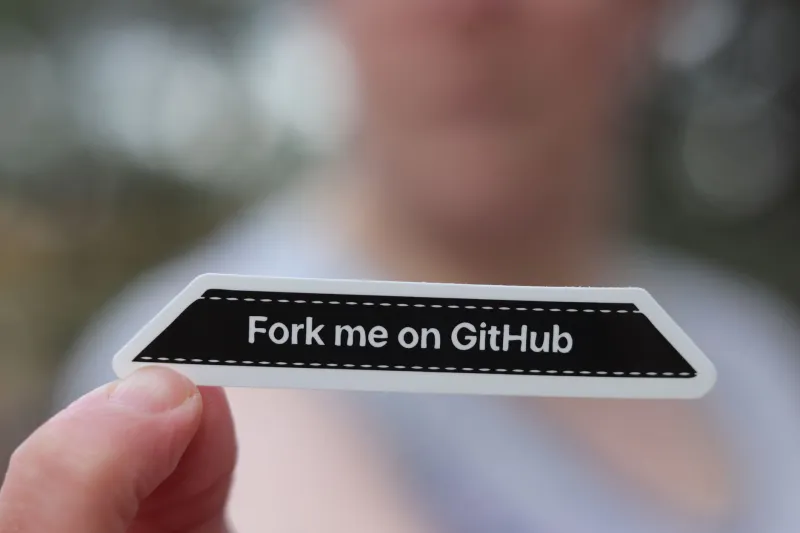
There's a moment in a lot of open-source communities where the vibe shifts. A corporate acquisition happens. A roadmap gets quietly buried. A maintainer stops responding to pull requests for six months. And then, eventually, someone forks the repo.
For a long time, that moment was treated like a eulogy — proof that a project had failed, that the community had fractured beyond repair. But the historical record tells a messier, more interesting story. Some of the most widely used software in the world today exists precisely because someone had the nerve to fork.
Forking isn't failure. In a lot of cases, it's the feature.
What a Fork Actually Signals
When a community splits over a project, the instinct is to focus on what broke down. And sure, sometimes forks are just drama — personality clashes, petty disputes over naming conventions, someone's bruised ego metastasizing into a GitHub repo. Those forks usually die quiet deaths within a year.
But the forks that thrive are telling you something different. They're telling you that a real, substantive disagreement exists about the direction of a piece of software — and that one group of people cared enough to do something about it rather than just complain on a mailing list.
LibreOffice is the canonical example here. When Oracle acquired Sun Microsystems in 2010, a significant chunk of the OpenOffice development community got nervous. Oracle's track record with open-source projects was, to put it charitably, complicated. A group of developers didn't wait to find out how it would play out. They forked, formed the Document Foundation, and started building. Today, LibreOffice is the dominant open-source office suite. OpenOffice, the original, is barely a footnote.
Same story with MariaDB and MySQL. Oracle again, coincidentally. The lead developer of MySQL saw the writing on the wall, forked the project, and built something that most of the Linux ecosystem now ships by default. MySQL still exists, but MariaDB has become the community's answer to corporate lock-in.
These aren't flukes. They're a pattern.
The Conditions That Make Forks Actually Work
Not every fork becomes LibreOffice. Most wither. So what separates the ones that take off from the ones that become cautionary tales?
A real reason to exist. The forks that survive aren't just protest forks — they have a genuine technical or philosophical thesis. LibreOffice wanted to be more aggressively open, more community-governed, and more responsive to contributors. That's a coherent vision, not just "we don't like Oracle."
Momentum from day one. A fork that launches with ten contributors is very different from one that launches with two hundred. The Document Foundation had serious developer buy-in immediately. That critical mass meant they could ship improvements fast enough to justify the switch for users.
Governance that isn't just a copy-paste of the original's mistakes. This is where a lot of forks fumble. They escape one set of structural problems and immediately recreate them under a different name. The forks that thrive tend to be deliberate about governance from the start — clear decision-making processes, transparent roadmaps, defined paths for new contributors to gain real influence.
A community that treats disagreement as data. Healthy forks don't pretend the split never happened. They use the reasons for the fork as a kind of founding document — a set of values that guides decisions when things get hard later.
Fragmentation vs. Diversification
One of the most common arguments against forking is fragmentation. Split a project and you split the contributor base, the documentation effort, the bug-reporting community. You end up with two half-baked versions of something instead of one good one.
This is a real concern, and it's not wrong in every case. The Linux desktop ecosystem has some genuinely exhausting examples of fragmentation that served nobody. But fragmentation and diversification aren't the same thing, even if they look similar from the outside.
Fragmentation happens when forks are competing to solve the same problem for the same users in nearly identical ways. That's just duplicated effort with extra steps.
Diversification happens when a fork takes a project in a direction the original never would have gone — serving a different use case, prioritizing different values, building for a different community. That's the open-source ecosystem doing what it's supposed to do: letting a thousand approaches compete on merit.
The question to ask when evaluating a fork isn't "is this splitting the community?" It's "does this fork have a distinct reason to exist that the original doesn't serve?"
The Governance Models That Actually Prevent the Bad Kind of Splits
Here's a counterintuitive take: good governance doesn't prevent forks. It prevents unnecessary forks.
A lot of damaging project splits happen because contributors felt like they had no real voice in the original project's direction. The decision-making was opaque. The roadmap was controlled by one company or one person. Legitimate concerns got ignored until the only option left was to leave and take the code with them.
Projects that invest early in transparent governance — real voting mechanisms, public roadmaps, defined escalation paths for disputes — tend to resolve disagreements before they reach fork territory. Not always. Sometimes the disagreement is genuinely irreconcilable and a fork is the right call. But a lot of the time, people just want to know that someone is listening.
Decentralized governance models are particularly good at this. When no single entity controls the roadmap, contributors have less reason to feel like the only way to be heard is to leave. The conversation stays inside the tent longer.
The Fork as a Check on Power
There's something worth naming explicitly here: the ability to fork is one of the most powerful checks on centralized control that the open-source world has.
When a corporation acquires a beloved project and starts making decisions that serve shareholders over users, the community can fork. When a single maintainer becomes a bottleneck or a liability, the community can fork. When a project's values drift from what its users actually need, the community can fork.
This isn't chaos. It's accountability. It's the decentralized equivalent of a vote of no confidence — and it works precisely because the code is open.
Proprietary software doesn't have this. When a company decides to sunset a product, add dark patterns, or change a pricing model in ways that hurt users, there's no recourse. You take it or you leave it. Open source gives communities an exit that isn't just an exit — it's a new beginning.
Building Like You Might Be Forked Someday
If you're building or maintaining an open-source project, the healthiest thing you can do is build it like someone might fork it one day — and that would be okay.
Document your architecture like someone else will need to understand it cold. Make your governance explicit enough that a new group could pick it up and run it. Don't build in dependencies on your own infrastructure that make the project impossible to carry forward without you.
A project that could survive a fork is a project that's genuinely open. Not just open-source in the license sense, but open in the structural sense — designed to be carried forward by whoever cares enough to do it.
That's the hive model, really. No single queen. Distributed intelligence. The colony survives because the knowledge and the work are spread across the whole community — not locked inside one repo, one roadmap, or one person's vision of what the thing should be.
Forks aren't the end of the story. Sometimes they're where the best part starts.